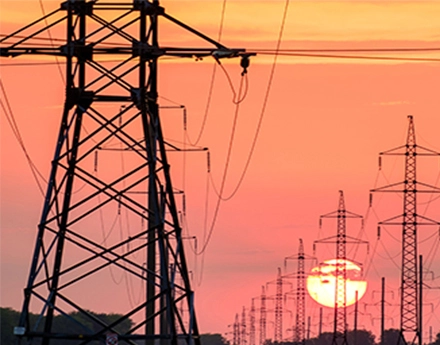
In the design and maintenance of electrical distribution networks, the spindle pin for insulation serves as a vital mechanical interface. While often overlooked due to its simplicity, the integrity of this component is paramount to the stability of overhead lines. When a pin fails, it can lead to insulator displacement, line grounding, and costly emergency power outages. Understanding the root causes of failure and implementing proactive inspection strategies is essential for grid operators and maintenance engineers aiming for maximum uptime.
The spindle pin for insulation acts as the anchor point for pin-type insulators, which are widely used in low-to-medium voltage distribution networks. By providing a secure, rigid mounting point on crossarms, these pins ensure that insulators remain in their designed position, maintaining the necessary clearance between energized conductors and the pole structure. Because they are constantly subjected to mechanical loads from conductor tension, as well as vibrations from wind and environmental forces, their structural health is a direct determinant of overall network safety.
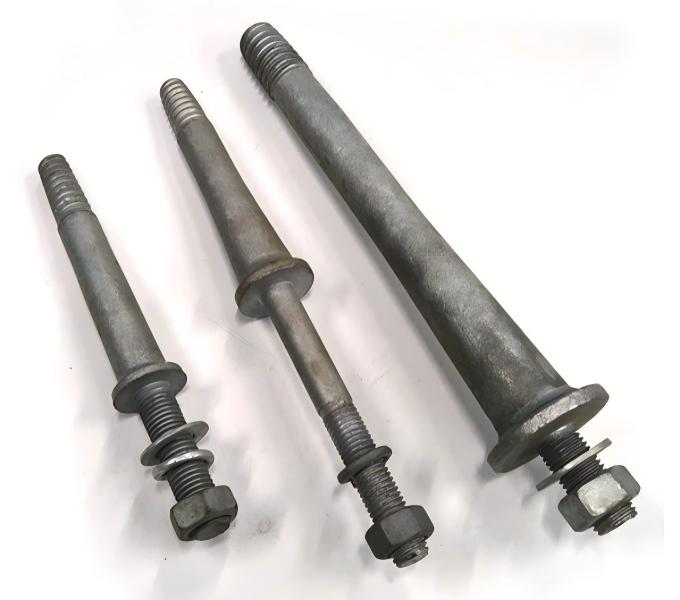
Failure in distribution hardware is rarely the result of a single event; it is usually the culmination of long-term exposure to mechanical and environmental stressors.
Overhead lines are in constant motion. Wind-induced vibrations (aeolian vibrations) create cyclic stress on the pin, particularly at the junction where the pin meets the crossarm. Over years of service, this cyclic loading can lead to fatigue cracks that eventually cause a sudden structural break.
Exposure to atmospheric moisture, industrial pollution, or coastal salt spray is the primary enemy of metallic hardware. While hot-dip galvanization provides a robust defense, once this protective layer is breached by scratches during installation or long-term abrasion, the underlying steel is vulnerable. Corrosion not only reduces the cross-sectional area of the pin—thereby decreasing its load-bearing capacity—but also causes expansion that can crack the insulator it is supporting.
A common, yet often ignored, cause of failure is improper installation. If a pin is overtightened, it may develop micro-cracks before it is even energized. Conversely, if it is undertightened, the resulting play allows for increased vibration, which accelerates mechanical wear on the threads and the crossarm hole.
Proactive identification of early-stage degradation can save utilities thousands in emergency repairs.
| Inspection Focus | Indicators of Potential Failure |
|---|---|
| Surface Coating | Visible rust, peeling galvanization, or white corrosion products on the steel surface. |
| Joint Integrity | Looseness at the crossarm junction or visible gaps between the pin base and crossarm. |
| Mechanical Alignment | Obvious tilting or bending of the pin away from its vertical design axis. |
| Thread Condition | Visible thinning or stripped threads caused by long-term vibration or poor initial fit. |
To mitigate these risks, distribution network managers should adopt a multi-layered approach to hardware procurement and maintenance.
The most effective way to prevent failure begins at the procurement stage. Choosing a reliable overhead line fittings provider ensures that the steel used in your pins meets rigorous mechanical standards. High-quality steel, coupled with a uniform hot-dip galvanized coating, significantly delays the onset of corrosion.
Maintenance teams should be trained to perform routine visual inspections during scheduled pole-top patrols. Any pin showing signs of excessive oxidation or alignment issues should be flagged for replacement before it reaches a critical failure state. Furthermore, ensuring that installation crews use the correct torque specifications is vital to preventing pre-installation fatigue.
At Yongguang, we recognize that the spindle pin for insulation is a cornerstone of your network’s reliability. Our manufacturing philosophy is built on the tenet: "Survive with quality, create a brand with reputation."
We provide hardware that doesn't just meet industry standards—it exceeds them. Our production process utilizes high-grade materials and rigorous heat treatment to ensure every pin can withstand the mechanical and thermal stresses of modern distribution environments. By choosing Yongguang, you are choosing a partner dedicated to transparency, technical excellence, and the long-term integrity of your infrastructure.
If your utility is looking to upgrade its hardware quality or if you require a technical consultation regarding your specific distribution network needs, please contact us. Our team is ready to provide the professional support required to keep your grid operational and resilient.
Preventing spindle pin failure is an ongoing commitment to grid health. By understanding the mechanical and environmental factors that lead to failure—such as fatigue and corrosion—and by implementing a rigorous inspection and procurement strategy, network operators can significantly reduce failure rates. Investing in high-quality hardware is the most cost-effective insurance policy against the disruptions caused by infrastructure degradation. With proactive measures and reliable manufacturing partners, you can ensure that your distribution network remains the backbone of a safe and efficient energy supply.
1. What is the most common cause of spindle pin failure?
The most common causes are a combination of environmental corrosion and long-term mechanical fatigue resulting from wind-induced vibrations on the overhead line.
2. How does proper torque impact spindle pin longevity?
Correct torque prevents vibration-induced wear at the crossarm junction and protects the pin from stress-induced micro-cracking that can occur during overtightening.
3. Why should I prioritize hot-dip galvanization for these components?
Hot-dip galvanization provides a superior, sacrificial zinc barrier that is significantly more durable and corrosion-resistant than electroplated or painted finishes.
4. How can I ensure the spindle pins I source are reliable?
Source from manufacturers that provide verified test reports for tensile load capacity, chemical material composition, and compliance with recognized international standards like IEC or ASTM.
 EN
EN