Choosing a clevis nut supplier is not simply a matter of comparing unit prices. Clevis nuts used in overhead power line projects must match the required connection dimensions, mechanical strength, surface protection and mating hardware. A small difference in the thread, opening width, pin diameter or load rating can prevent correct assembly or create unnecessary project risk.
When buyers search for a clevis nut supplier China, they should evaluate the supplier’s understanding of power line hardware, not only its general metalworking capacity. A reliable supplier should be able to review drawings, confirm critical dimensions, explain material and finishing options, arrange samples, conduct agreed inspections and prepare the order for international delivery.
This guide explains the main factors procurement teams should check before placing a clevis nut order for transmission or distribution line projects.
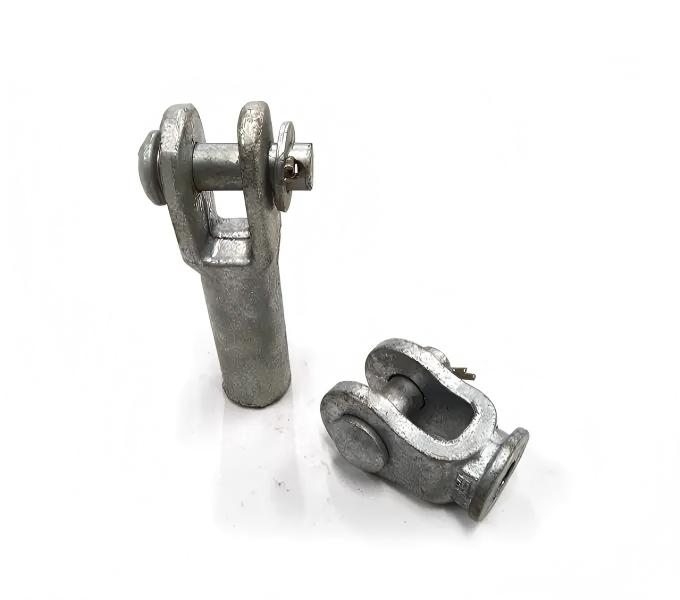
A clevis nut is a connection fitting that combines a threaded body with a clevis-style end. The threaded section connects to a compatible bolt, rod or other threaded component, while the clevis end provides a pinned connection to matching line hardware.
This configuration allows the fitting to become part of a mechanical connection between different components in an overhead line assembly. Depending on the project design, it may be used with related pole line hardware, insulator fittings, rods, links or other connecting components.
The exact application should always be determined by the approved project drawing. Similar-looking clevis nuts may have different thread sizes, pin dimensions, opening widths and strength ratings. Buyers should therefore avoid selecting a product from photographs alone.
For a broader view of compatible products, buyers can review YONGGUANG’s range of overhead line fittings.
A supplier cannot prepare an accurate quotation without a clear technical requirement. Before requesting a price, the buyer should collect the product drawing, reference sample or complete specification sheet.
The most important information normally includes:
Thread type, diameter and pitch
Overall length and body dimensions
Clevis opening width and depth
Clevis pin diameter and usable length
Required mechanical strength rating
Body, pin and cotter pin materials
Surface treatment and corrosion-protection requirement
Dimensional tolerances
Matching hardware or assembly details
Applicable project specification or standard
Order quantity and required delivery schedule
Providing this information at the beginning reduces repeated communication and helps suppliers identify whether an existing model is suitable or whether customized production is required.
| Evaluation Area | What the Buyer Should Confirm | Risk if It Is Overlooked |
|---|---|---|
| Product understanding | The supplier understands clevis nuts as power line fittings rather than ordinary industrial fasteners. | The product may not match the intended line assembly. |
| Dimensions | Thread, opening width, pin diameter and overall dimensions match the drawing. | Parts may not assemble correctly with mating hardware. |
| Material | The body, clevis pin and cotter pin materials are clearly identified. | Strength, corrosion resistance or service life may be inconsistent. |
| Mechanical rating | The stated strength corresponds to the required model and test method. | An unsuitable fitting may be selected for the design load. |
| Galvanizing | The coating is complete, uniform and compatible with the thread and pin connection. | Poor coating may cause corrosion or assembly difficulties. |
| Quality control | The supplier can provide agreed dimensional, material and mechanical inspections. | Nonconforming products may only be found after delivery. |
| Sample approval | A pre-production or production sample can be checked when necessary. | Bulk production may proceed before compatibility is confirmed. |
| Packaging and delivery | Heavy metal fittings are protected, labeled and packed for export handling. | Products may be mixed, damaged or difficult to identify on arrival. |
The material configuration affects mechanical performance, manufacturing consistency and resistance to outdoor exposure. Buyers should ask the supplier to identify the material used for each part rather than accepting a general description such as "metal" or "galvanized hardware."
YONGGUANG’s current clevis nut specifications list a steel body, a galvanized steel clevis pin and a stainless steel cotter pin. This combination is intended to provide a load-bearing body and pin together with a corrosion-resistant retaining component.
The current product range also lists strength ratings of 70 kN, 120 kN and 180 kN. These figures should not be treated as interchangeable options. The required rating must be selected according to the approved line design, matching hardware and project specification.
A professional supplier should confirm which drawing or model corresponds to each rating. Buyers should also clarify whether the stated value represents a specified minimum strength, a test value or another rating defined by the project documentation.
Clevis nuts used outdoors are exposed to rain, humidity, temperature changes and other environmental conditions. Hot-dip galvanizing is commonly used on ferrous overhead line fittings to provide a protective zinc coating.
However, the words "hot-dip galvanized" alone do not confirm coating quality. Buyers should evaluate whether the finish is complete and suitable for assembly. Important inspection points include:
Uncoated or missed areas
Excess zinc that interferes with the thread
Sharp zinc projections or heavy surface buildup
Uneven coating around holes and edges
Damage caused during handling or packing
Difficulty inserting or removing the clevis pin
The correct coating requirement should be agreed before production. Where the project specifies a coating standard, minimum coating value or test method, it should be stated in the purchase document instead of being assumed.
A clevis nut operates as part of an assembly. Its dimensions must therefore be checked against the connected bolt, rod, link, eye or other fitting.
The thread should engage correctly without excessive looseness or binding. The clevis opening must accommodate the mating component, while the pin must pass through the aligned holes without requiring forced installation. At the same time, the connection should not have excessive clearance that could affect the intended assembly.
For custom or unfamiliar designs, buyers can provide the supplier with information about both sides of the connection. An assembly drawing is often more useful than an isolated clevis nut drawing because it shows how the fitting interacts with adjacent components.
A dependable clevis nut supplier should explain how quality is checked from incoming material through final packing. The process does not need to be complicated, but it should address the characteristics that matter to the order.
The supplier should confirm that the purchased material corresponds to the production requirement. Where material documentation is required, this should be agreed before ordering rather than requested after production is complete.
Critical dimensions should be identified from the drawing and checked with appropriate measuring equipment. Thread size, clevis opening, hole diameter, pin dimensions and overall length are usually more important than nonfunctional cosmetic dimensions.
The body, clevis pin and cotter pin should be checked as a complete set. The pin should fit the opening and mating holes correctly, and the cotter pin should retain it as intended.
When mechanical testing is required, the buyer and supplier should agree on the test load, sampling plan, test method and acceptance criteria. Test results are meaningful only when they are clearly connected to the ordered model and project requirement.
Before shipment, the supplier should inspect the galvanized surface, product quantity, component completeness, labeling and packaging. This helps prevent missing pins, mixed models and handling damage.
A sample is particularly useful when the buyer is sourcing a customized design, changing suppliers or ordering a clevis nut for a new assembly. Sample approval allows the procurement and engineering teams to verify dimensions, thread engagement, pin fit and general workmanship before bulk production.
Sample approval should not be limited to appearance. The buyer should compare the sample with the drawing and, where possible, test it with the actual mating components. Any approved changes should be recorded so that bulk production follows the same revision.
For standard repeat orders, a sample may not always be necessary. In that case, the supplier should still confirm the drawing number, revision, model and inspection requirements before production begins.
Many power line projects use regional specifications, utility drawings or contractor-specific dimensions. A capable clevis nut supplier in China should be able to determine whether the request can be met with an existing product or requires customized manufacturing.
For a custom order, buyers should evaluate how the supplier handles drawing review, tooling, sample production and revision control. The quotation should clearly state which requirements are included and which details still need confirmation.
Customization should not mean making uncontrolled changes during production. Once the drawing and sample are approved, the final dimensions, materials, finish and component configuration should remain consistent with the agreed specification.
The lowest quotation is not always the lowest total procurement cost. A more useful comparison includes the product specification, inspection scope, sample cost, tooling charge, packaging, lead time, shipping terms and documentation.
When reviewing quotations, confirm whether each supplier is pricing the same:
Material configuration
Mechanical strength rating
Surface treatment
Clevis pin and cotter pin set
Drawing revision
Inspection requirements
Packaging method
Trade and delivery terms
A quotation that omits the pin, uses a different finish or excludes required testing may appear cheaper while providing a different product. A clear technical comparison protects both the buyer and the supplier from disputes later in the order.
Clevis nuts are relatively compact metal fittings, but bulk orders can become heavy. Packaging should therefore be designed for the product weight, handling method and shipping route.
The supplier should protect the galvanized surfaces from unnecessary impact and moisture exposure during storage and transportation. Pins and cotter pins must also be packed securely so that complete sets arrive together.
For projects involving several models, each package should have clear identification. Useful label information can include the product name, model, drawing number, quantity, purchase order reference and package number. Clear identification reduces sorting time when the goods arrive at the warehouse or project site.
YONGGUANG supplies clevis nuts as part of its broader power line hardware portfolio. This product context is important because clevis nuts must often be selected together with other connection fittings rather than purchased as isolated general-purpose fasteners.
The available YONGGUANG clevis nut configurations include steel bodies, galvanized steel clevis pins, stainless steel cotter pins and hot-dip galvanized finishing. Multiple strength ratings are available for different project requirements, subject to model and specification confirmation.
Buyers can send YONGGUANG a drawing, reference image, required strength, order quantity and destination information for review. The team can then confirm the available configuration, customization requirements and quotation details.
Need help confirming a clevis nut specification? Contact YONGGUANG with your drawing or project requirements to request a technical review and quotation.
Choosing a reliable clevis nut supplier in China requires more than finding a factory that can manufacture a similar-looking fitting. Buyers should confirm the thread, clevis dimensions, pin configuration, material, mechanical rating, galvanizing, inspection process and compatibility with the complete line assembly.
The most effective procurement process begins with a clear drawing and ends with documented approval of the product, inspection requirements, packaging and delivery terms. By evaluating technical capability and order control alongside price, buyers can reduce sourcing risk and obtain clevis nuts that are better suited to their power line projects.
Send the product drawing or sample, thread specification, key dimensions, required strength, materials, surface finish, quantity and applicable project requirements.
Select the rating according to the approved line design, matching hardware and project specification. Do not choose a rating based only on product size or appearance.
Hot-dip galvanizing provides a protective zinc coating for ferrous fittings used in outdoor environments. The coating must still be inspected for coverage, uniformity and assembly suitability.
Many suppliers can produce custom designs, but feasibility depends on the drawing, material, quantity and testing requirements. Request a drawing review and sample confirmation before bulk production.
 EN
EN