Buying overhead line fittings for a utility project involves much more than sending a product name and asking for a price. A fitting may look correct in a catalog but still be unsuitable for the actual line if its connection dimensions, mechanical performance, material, or corrosion protection do not match the project design.
This is especially important for utility companies, EPC contractors, distributors, and project procurement teams sourcing overhead line fittings in China. A clear RFQ allows the manufacturer to understand the application before quoting, reduces repeated technical clarification, and makes it easier for buyers to compare suppliers on the same basis.
Quick answer: A useful RFQ should explain where the fitting will be used, identify the required design, and define the technical requirements that could affect compatibility or performance. Whenever possible, attach an approved drawing, project specification, BOM, or reference sample.
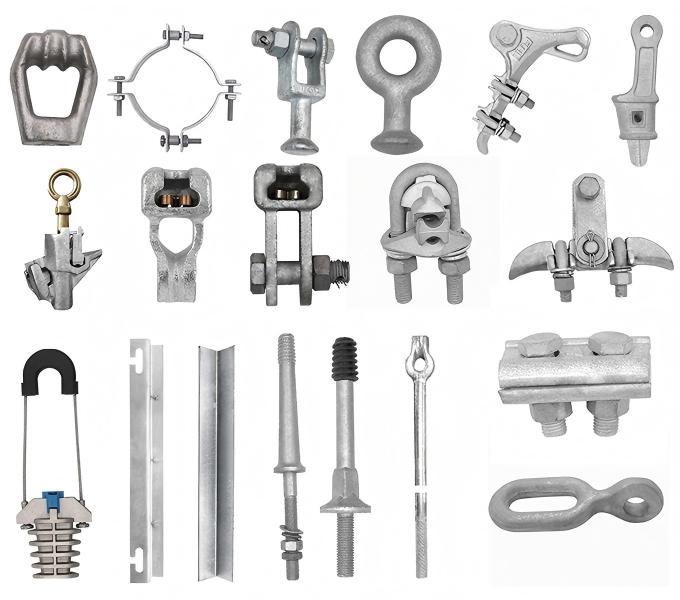
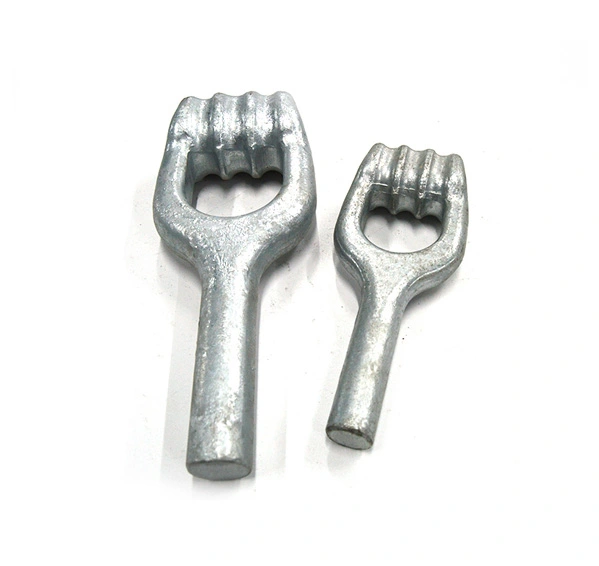
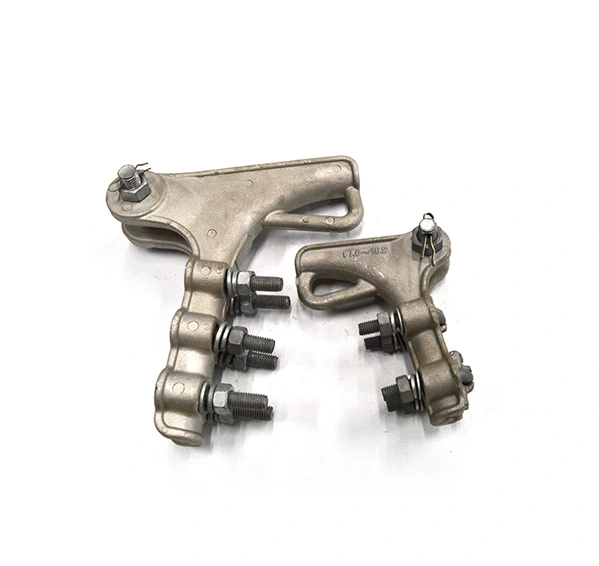
Overhead line hardware works as part of a complete mechanical assembly. A clevis, eye bolt, yoke plate, stay rod, shackle, or cross arm must connect correctly with other parts of the line rather than simply meet a general product description.
That is why requests such as “Please quote galvanized clevis fittings” often lead to several rounds of questions. The supplier still needs to understand the exact design, connection interface, required strength, and project specification before an accurate quotation can be prepared.
A good RFQ answers those questions early. It gives both the buyer and manufacturer a common technical basis before price, tooling, production, and delivery are discussed.
| RFQ Item | What the Buyer Should Provide | Why It Matters |
|---|---|---|
| Application | Explain where the fitting will be used and its function in the line assembly. | Helps the supplier understand the required configuration. |
| Product Reference | Provide a drawing, utility code, catalog number, or existing sample reference. | Reduces the risk of selecting a similar but incompatible fitting. |
| Critical Dimensions | Highlight dimensions that affect installation and connection with adjacent parts. | Ensures mechanical compatibility. |
| Material | State the required material or project specification where applicable. | Affects strength, manufacturing method, and corrosion behavior. |
| Mechanical Performance | Provide the load or test requirement defined by the project. | Confirms whether the fitting is suitable for the intended duty. |
| Surface Protection | Identify the required galvanizing or other corrosion-protection specification. | Important for long-term outdoor service. |
| Standard | Reference the applicable utility, project, national, or international standard. | Creates a clear basis for manufacturing and inspection. |
| Testing and Documents | State any required inspection reports, certificates, or test documentation. | Avoids adding quality requirements after quotation. |
| Quantity and Packing | Provide quantities and any special marking or export packing requirements. | Helps the supplier prepare a practical commercial quotation. |
The first thing a supplier needs to understand is not the price target but the application.
Explain whether the fitting is intended for a transmission line, distribution network, pole-line assembly, insulator string, guying system, or another part of the utility infrastructure. A short description of the installation can often prevent incorrect product selection later.
If the fitting belongs to a larger assembly, it is useful to provide the corresponding assembly drawing or BOM. This helps the manufacturer understand not only the individual component but also how it interacts with the rest of the system.
This matters because similar-looking hardware can perform very different functions. An experienced supplier should be able to review the application before confirming the product design.
When sourcing overhead line fittings in China, avoid relying on broad product names alone.
Terms such as “eye bolt,” “clevis,” or “shackle” can refer to several designs. If you already have an approved utility drawing or existing item code, include it with the inquiry. That is usually the fastest way to make sure both sides are discussing the same product.
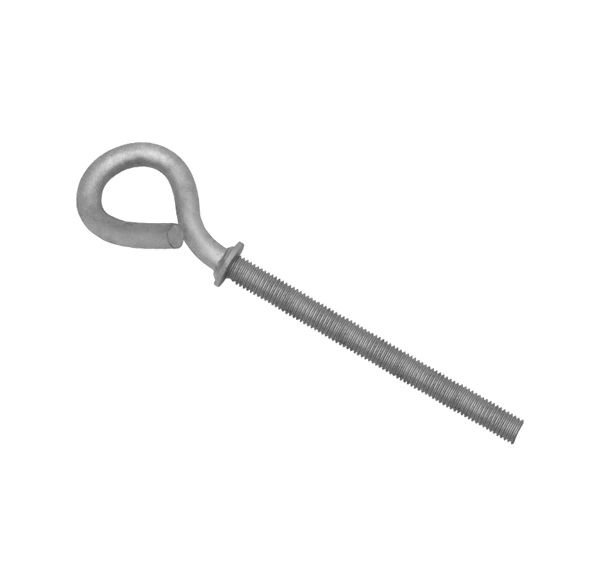
If no formal drawing is available, provide enough information for the manufacturer to understand the design. For an eye bolt, for example, the overall geometry, thread configuration, eye size, and required finish may be more useful than simply sending a photograph.
The goal is not to make the RFQ unnecessarily complicated. It is to remove the details that would otherwise have to be guessed.
For utility-specific hardware, technical drawings are often the most valuable part of an RFQ.
A drawing makes it possible to confirm how the fitting connects with other components and which dimensions are critical to installation. Depending on the product, this may include a pin connection, bolt hole, threaded section, plate spacing, or another interface.
Instead of sending a long written description, mark important dimensions directly on the drawing whenever possible. This makes communication faster and reduces the chance of misunderstanding.
Photographs can still be useful for identifying the general product style, but they should not replace dimensional information. If the project already has an approved drawing, also confirm that the latest revision is being used.
Material should be defined according to the project rather than assumed from appearance.
Different overhead line fittings may be manufactured from steel, ductile iron, aluminum, or other specified materials depending on their function. In many cases, the material requirement will already be stated on the project drawing or utility specification.
If a particular grade is mandatory, include it in the RFQ. If the project focuses more on performance than on a specific material, explain the application and ask the manufacturer to propose a suitable option for technical approval.
This approach is better than allowing material substitutions to occur without discussion, especially for load-bearing components.
Dimensions alone do not determine whether an overhead line fitting is suitable. Mechanical performance must also match the conditions for which the component is designed.
The safest approach is to use the load or test requirement stated in the approved project specification. If a particular proof, tensile, slip, or failure requirement applies, communicate it exactly as the project defines it.
It is also important to explain how the fitting is loaded in the real assembly. The same nominal value can have different meaning if the test arrangement or direction of loading changes.
For this reason, buyers should avoid choosing a fitting simply because its dimensions resemble an existing part. The manufacturer should review both the geometry and the required performance.
Many steel overhead line fittings remain outdoors for long periods, so corrosion protection can directly affect service reliability.
If the project requires hot-dip galvanizing, state that clearly. Avoid using broad wording such as “zinc coated” if the utility specification defines a particular process or inspection requirement.
For projects in coastal, humid, or otherwise corrosive environments, corrosion protection deserves even more attention. In these situations, buyers should confirm that the proposed finish is suitable for the project conditions rather than assuming all galvanized products offer the same level of protection.
When comparing suppliers of overhead line fittings in China, make sure the quotations are based on the same coating requirement. A lower unit price may simply reflect a different technical basis.
Compatibility is one of the most common reasons a technically acceptable fitting may still fail to work in the field.
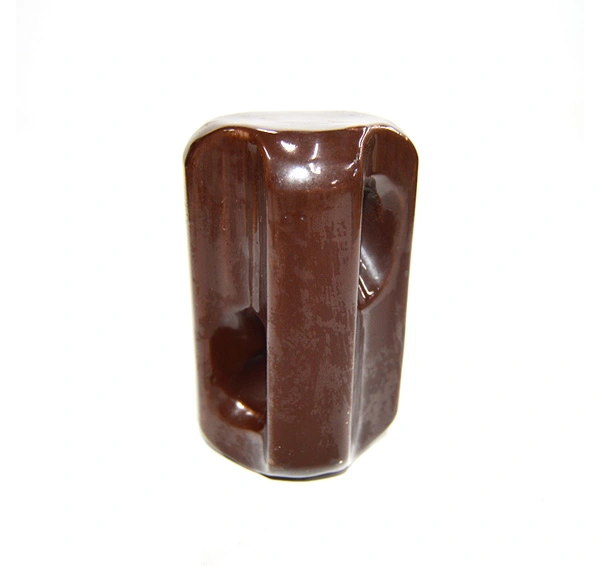
For example, hardware used in an insulator string may need to match a clevis, ball eye, socket fitting, shackle, or yoke plate. Even a small difference in the connection interface can prevent proper assembly.
Rather than checking each product separately, review the complete connection. If several fittings are being purchased together, sending the full assembly drawing gives the manufacturer a better opportunity to identify possible mismatches before production.
Buyers should also clarify whether small accessories such as pins, nuts, washers, or retaining parts are included in the quoted assembly. This is a simple detail that can otherwise cause confusion during delivery or installation.
Requests for “international standard quality” sound clear but are not precise enough for utility procurement.
If the project is governed by an IEC, ANSI, ASTM, EN, national, utility-specific, or other project standard, include the relevant reference in the RFQ. This gives the manufacturer a defined basis for production and helps the buyer evaluate whether competing quotations are technically equivalent.
Where no formal standard is specified, the project drawing and agreed technical requirements become even more important.
The key is consistency: every supplier being compared should quote against the same specification.
Testing and documentation requirements should be agreed during the RFQ stage rather than introduced after the purchase order.
Some projects only require routine dimensional and visual inspection, while others may request additional mechanical testing, coating inspection, material documentation, or third-party verification.
The exact requirement depends on the project, but the principle is simple: tell the supplier what evidence will be needed for acceptance before the quotation is finalized.
This allows the manufacturer to include the appropriate inspection process in production planning and makes supplier quotations easier to compare.
A technically complete inquiry still needs basic commercial context.
Provide the required quantity for each item and indicate whether the project has any special marking or packing requirements. This is particularly important when several fittings will be shipped together for the same utility or EPC project.
For example, project codes, part identification, or separated packing may help contractors manage the material after it arrives at the warehouse or job site.
If export packaging or destination-specific requirements apply, include them at the quotation stage so they can be considered from the beginning.
China has a broad manufacturing base for power-line hardware, so supplier evaluation should go beyond comparing unit prices.
A capable manufacturer should be able to understand drawings, discuss application requirements, identify unclear interfaces, and explain how the requested fitting will be produced and inspected.
For multi-item projects, experience with complete power-line assemblies is particularly valuable. A supplier that understands the relationship between pole hardware, insulators, connecting fittings, and associated accessories can often identify technical questions before they become production problems.
You can review YONGGUANG's broader power transmission and distribution product range when preparing a project BOM or sourcing several related components from one supplier.
Many purchasing problems can be traced back to incomplete information at the inquiry stage.
One common mistake is sending only a photograph and expecting the supplier to determine the exact dimensions. Another is asking for a generic product without explaining how it connects with the rest of the assembly. Buyers may also request galvanizing or testing without defining the relevant project requirement.
Another issue appears when different suppliers receive slightly different specifications. Their prices may look comparable, but they may not be quoting the same product.
A stronger approach is to issue one controlled RFQ package and use it for every supplier under consideration.
Before sending your inquiry, make sure the manufacturer can answer the following questions:
Where will the fitting be used?
Which drawing, item code, or product reference defines it?
Which dimensions are critical to the connection?
What material and surface protection does the project require?
What mechanical requirement must the fitting meet?
Which standard or utility specification applies?
What inspection or documentation will be required?
What quantity and packaging arrangement should be quoted?
If these questions are clear, most of the important technical information is already in place.
If you are sourcing overhead line fittings in China, sending a drawing, BOM, existing specification, or reference sample at the beginning can make technical communication much more efficient.
YONGGUANG supplies power transmission and distribution line hardware for overseas customers and can work with standard products as well as project-specific requirements. For buyers purchasing several related fittings, reviewing the complete assembly can also help identify connection requirements before production.
Have a project ready for quotation? Contact YONGGUANG and send the available drawings, specifications, quantities, and project information. The team can review your requirements and help clarify the appropriate product configuration before quotation.
A good RFQ does not need to be unnecessarily long. It simply needs to give the manufacturer enough information to understand the fitting, its application, and the technical requirements that matter to the project.
For buyers sourcing overhead line fittings in China, this clarity can reduce repeated communication, improve quotation accuracy, and make supplier comparisons more meaningful.
The most effective approach is to begin with the actual utility application, support it with a drawing or clear reference, and define the requirements that affect compatibility and performance. Once those points are agreed, discussions about price, production, inspection, and delivery become much more straightforward.
Explain the application and provide the product drawing or reference, critical technical requirements, quantity, and any inspection or packaging expectations.
A drawing is strongly recommended for utility-specific or customized fittings because it helps both sides confirm the design and connection dimensions before production.
Make sure every supplier is quoting against the same drawing, material, performance, coating, and inspection requirements before comparing prices.
Send the application details, existing photos, assembly drawing, utility specification, or sample information so the manufacturer can help identify the appropriate configuration.
 EN
EN