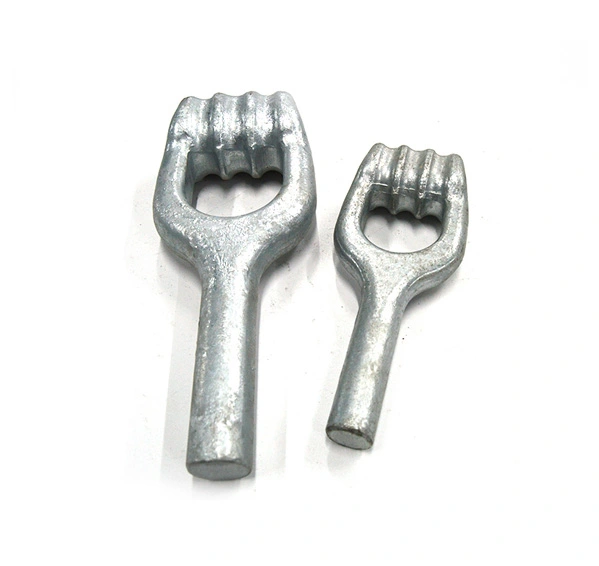
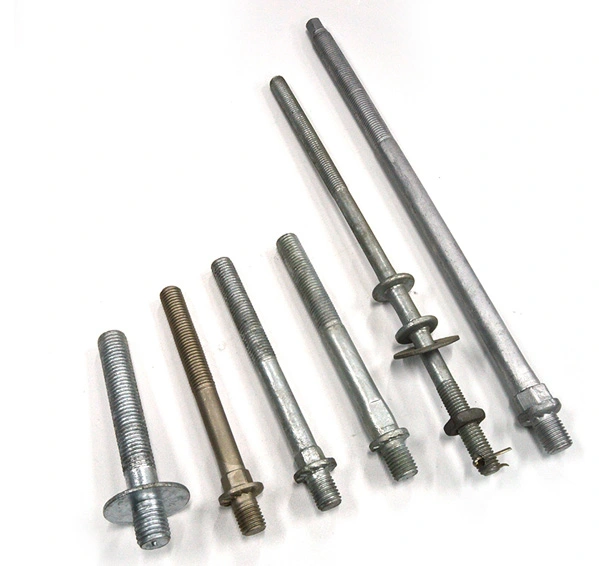
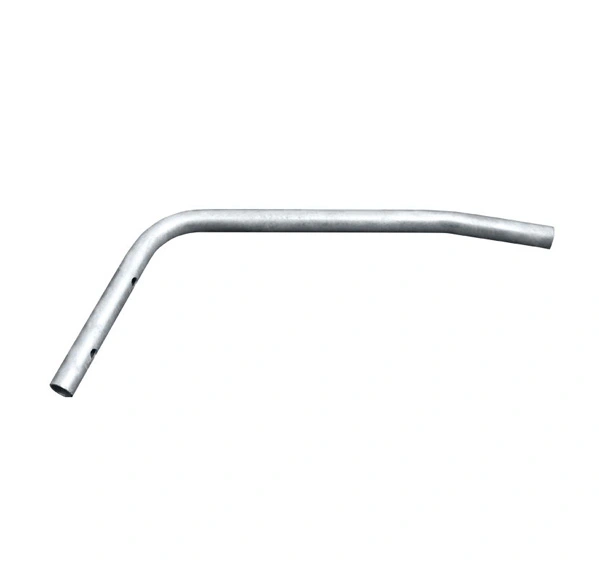
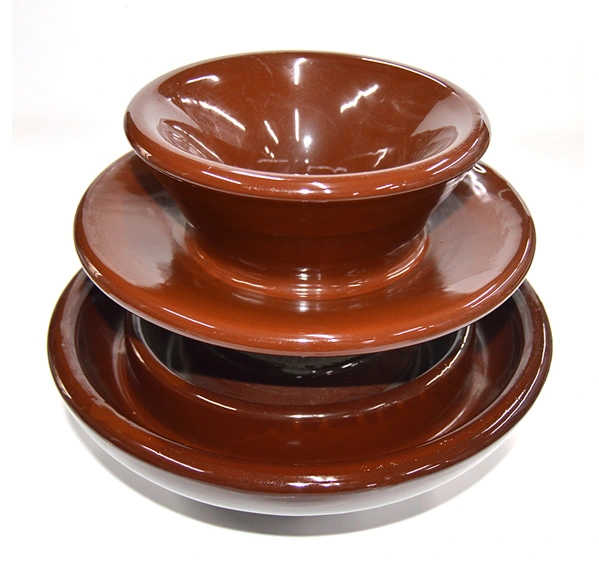
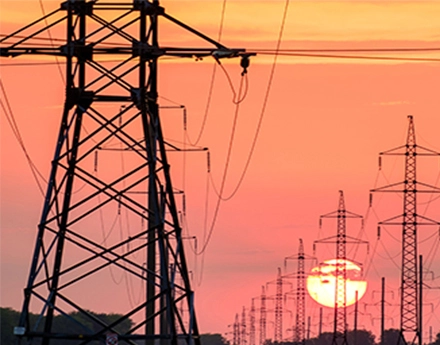
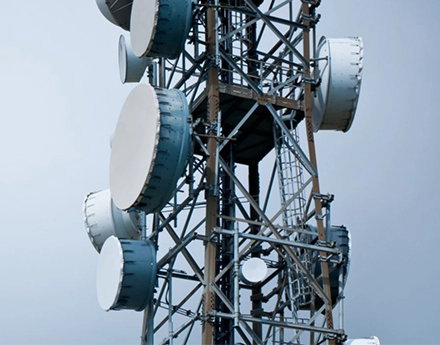
Distribution lines rely on many interconnected components working together. Conductors, insulators, poles, brackets, clamps, and connection fittings must form a reliable system that can withstand electrical, mechanical, and environmental conditions throughout long-term operation.
For this reason, selecting overhead line accessories is not only about choosing individual products from a catalog. Each accessory needs to match its installation point and work correctly with the surrounding components.
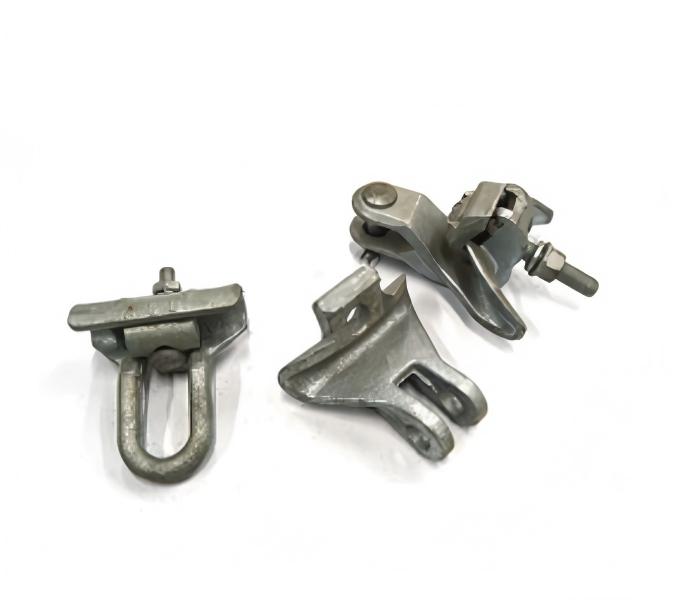
A suspension clamp installed on a straight pole section has a different role from an anchoring wedge clamp used at a cable termination point. A clevis, shackle, or yoke plate used in an insulator string also has different connection requirements from hardware used for conductor support.
Quick answer: The right overhead line accessories should be selected according to where they are installed, what load they carry, which components they connect with, and the requirements of the distribution line design. Understanding the complete installation point helps buyers avoid compatibility issues and improve system reliability.
Every point in a distribution line has a different function. Some locations support the conductor, some transfer mechanical tension, and others connect insulation systems or provide structural stability.
A common purchasing mistake is selecting accessories only by product name. However, a clamp, fitting, or connector that appears suitable in isolation may not perform correctly if it does not match the conductor type, pole arrangement, insulator configuration, or mechanical requirement of the installation.
For example, a distribution line may include:
Straight-line sections where conductors need continuous support
Angle poles where directional forces increase
Terminal points where conductor tension must be anchored
Insulator assemblies where hardware connections must match precisely
Grounding or protection points requiring specialized fittings
Each location creates different requirements for the selected hardware.
| Installation Point | Typical Function | Common Accessories | Main Selection Consideration |
|---|---|---|---|
| Straight Pole Section | Support the conductor while maintaining line alignment | Suspension clamps, support fittings, brackets | Conductor size, support method, and mechanical load |
| Angle Pole or Direction Change Point | Handle increased directional forces | Strain clamps, tension fittings, connecting hardware | Tension transfer and structural compatibility |
| Line End or Dead-End Point | Secure conductor or cable termination | Anchoring wedge clamps, dead-end fittings, anchor hardware | Cable compatibility and holding performance |
| Insulator String Connection | Connect insulation components with line hardware | Clevis fittings, shackles, ball eyes, yoke plates | Interface dimensions and assembly matching |
| Pole Support and Guying System | Provide additional mechanical stability | Stay rods, anchor rods, guy fittings | Load direction and installation conditions |
Straight sections of distribution lines usually focus on maintaining conductor support while allowing the line to operate under normal service conditions.
At these locations, accessories such as suspension clamps and support fittings help hold the conductor in position while transferring weight to the supporting structure.
The selection process should consider how the conductor is supported and how the accessory interacts with the cable or wire surface. A suitable fitting should provide reliable support without creating unnecessary stress on the conductor.
For buyers, important questions include:
What conductor or cable type is being supported?
Does the clamp match the conductor dimensions?
Is the accessory suitable for the expected environmental conditions?
Does the connection method match the pole or bracket design?
These details help ensure that the selected overhead line accessories perform correctly throughout the service life of the distribution line.
When a distribution line changes direction, the mechanical forces acting on the hardware can become different from those in a straight section.
Angle poles and tension locations often require accessories designed to transfer greater mechanical forces through the assembly. Depending on the line design, this may involve strain clamps, tension fittings, or additional connecting hardware.
The important consideration is how the force moves through the complete system.
A suitable accessory should match:
The conductor or cable being secured
The direction of mechanical loading
The supporting structure
The connected fittings and hardware
This is why selecting a product based only on appearance or product name can create problems. The accessory must be reviewed as part of the complete distribution line assembly.
Terminal points require a different approach because the conductor or cable needs to be securely held while transferring tension to the support structure.
An anchoring wedge clamp is commonly used for compatible insulated overhead cables where a wedge-based gripping mechanism provides cable anchoring. The clamp works together with supporting brackets and related hardware to create a complete termination arrangement.
Correct selection depends on cable size, gripping range, connection method, and project requirements. A clamp designed for one cable range should not automatically be applied to another cable type without verification.
For distribution projects involving multiple accessories, buyers should review the complete termination assembly rather than ordering the clamp separately from the supporting hardware.
YONGGUANG supplies cable accessories and power line hardware designed for different overhead distribution applications. Buyers can review the company's complete power transmission and distribution product range when preparing a project material list.
Insulator connection points require accurate matching because several components work together to maintain both insulation and mechanical support.
Hardware such as shackles, ball eyes, clevis fittings, socket fittings, and yoke plates connects different parts of the insulator string. A mismatch in hole dimensions, pin connections, or fitting geometry can prevent proper assembly even when each individual component meets its own specification.
When purchasing accessories for insulator strings, buyers should consider the complete connection path:
Supporting structure → connecting hardware → insulator → conductor fitting → conductor
Reviewing this complete path helps identify compatibility issues before production and installation.
Some distribution structures require additional support to maintain stability under mechanical loads, especially where poles experience unbalanced forces.
Guying systems use accessories such as stay rods, anchor rods, and related fittings to transfer forces into the ground or supporting structure.
The correct selection depends on the installation arrangement and the direction of applied forces. The hardware should be suitable for the pole type, anchor arrangement, and expected service conditions.
Because guying components are part of a larger support system, buyers should evaluate them together with the pole structure rather than treating them as isolated products.
A reliable purchasing process starts with understanding the complete distribution line design.
Before requesting quotations, buyers should provide enough information for suppliers to understand where each accessory will be installed and how it will connect with other components.
| Information to Provide | Why It Helps |
|---|---|
| Line application and installation location | Helps identify the correct accessory category |
| Conductor or cable information | Ensures correct dimensional and mechanical matching |
| Assembly drawing or BOM | Confirms compatibility between connected components |
| Project specification or standard | Defines technical expectations and inspection requirements |
| Environmental conditions | Supports suitable material and protection selection |
This approach allows suppliers to provide a more accurate quotation and reduces the risk of changes after production begins.
Selecting a supplier for distribution line hardware involves more than finding a matching product name. Technical understanding, manufacturing capability, and communication during project preparation are equally important.
YONGGUANG provides overhead line accessories, power line hardware, cable fittings, insulators, and related components for transmission and distribution applications.
With a broader product range, YONGGUANG can support projects that require multiple connected components rather than a single standalone item. This helps buyers review product compatibility across the complete line assembly.
Need help selecting the right accessories for your distribution project? Contact YONGGUANG with your project drawings, cable information, or material requirements. The team can review your application and help identify suitable hardware solutions.
Choosing overhead line accessories for distribution lines requires an understanding of where each component works within the complete system.
Straight-line sections, angle poles, termination points, insulator assemblies, and guying structures all create different mechanical and connection requirements. The right accessory is the one that matches the installation point, conductor or cable, supporting structure, and overall line design.
For utility companies, EPC contractors, and distributors, reviewing hardware as part of a complete assembly leads to better product selection, fewer installation problems, and more reliable distribution networks.
Overhead line accessories are used to support, connect, anchor, and protect components in overhead transmission and distribution systems.
Not always. Each installation point has different mechanical and connection requirements, so accessories should be selected according to their specific application.
Buyers should provide the application, cable or conductor details, drawings, required standards, and installation conditions.
Because accessories work as part of an assembly. Incorrect dimensions or connections can affect installation and long-term reliability.
 EN
EN