A hot line tap clamp quotation may appear straightforward, but a product name and order quantity are rarely enough to define the correct fitting. Suppliers may quote clamps with different conductor ranges, component materials, dimensions, inspection scopes or packaging configurations.
When buyers search for hot line tap clamp suppliers China, they should look beyond price and confirm whether each supplier understands the conductor combination, project specification, documentation requirements and delivery conditions.
This guide explains the key questions utilities, electrical contractors, distributors and project procurement teams should ask before placing an order.
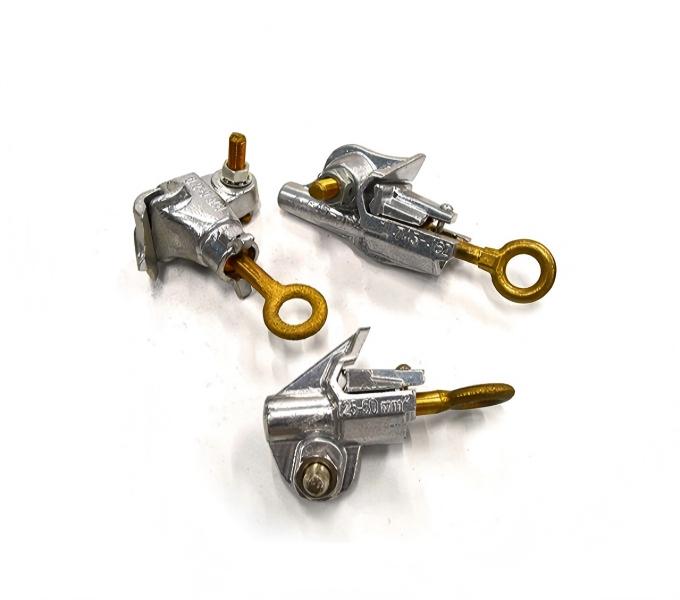
Before requesting a firm quotation, buyers should confirm the main conductor, tap conductor, component materials, product dimensions, applicable project specification, inspection scope, quantity and delivery destination.
The most reliable quotation is usually based on a product drawing, specification sheet or approved sample rather than a general photograph. Buyers should also ask whether the quoted price includes all bolts, connectors, hardware, markings, inspections and export packaging.
A hot line tap clamp connects a main conductor with a tap conductor. Both sides of the connection must therefore be clearly identified before the supplier recommends a model.
The RFQ should state the material, construction and size of the main conductor and tap conductor. Buyers should also explain whether the conductors are bare or covered and whether one clamp must accommodate several conductor sizes.
If the project involves multiple conductor combinations, present them in a table so that the supplier can recommend the correct model for each connection.
| Requirement | Information to Provide | Reason for Confirmation |
|---|---|---|
| Main conductor | Material, type and size | Determines the required main groove configuration |
| Tap conductor | Material, type and size | Determines the tap-side connection range |
| Conductor condition | Bare or covered conductor | Affects product selection and installation requirements |
| Product reference | Drawing, model, photograph or approved sample | Reduces the risk of quoting a similar but incorrect clamp |
| Project requirement | Utility drawing, specification or applicable standard | Defines the expected design and inspection criteria |
Ask the supplier to confirm conductor compatibility in writing. A similar product appearance does not prove that the grooves and connecting surfaces are suitable for the intended conductor pairing.
A hot line tap clamp is an assembly made from several parts. Buyers should request the material of the clamp body, eye bolt, eye connector and any additional hardware separately.
YONGGUANG currently lists an aluminum alloy clamp body, a stainless steel eye bolt and a bronze eye connector for its hot line tap clamp. These materials should still be written into the purchase specification so that they become part of the confirmed order.
| Component | Information to Confirm | Why It Matters |
|---|---|---|
| Clamp body | Material grade or agreed material description | Influences conductor compatibility and product consistency |
| Eye bolt | Material, thread and dimensions | Affects tightening and installation |
| Eye connector | Material, shape and connection dimensions | Must match the required connection method |
| Additional hardware | Nuts, washers or other included parts | Prevents incomplete product sets |
A dimensioned drawing allows the buyer to verify the quoted product before sample approval or mass production. It should identify the main conductor groove, tap conductor groove, bolt dimensions, thread details, connector dimensions and overall product size.
The supplier should also place a drawing number and revision on the document. This helps prevent an outdated version from being used after technical changes have been approved.
Some conductor combinations can use an existing clamp model, while others may require dimensional changes. Ask whether the quotation is based on a standard product or a customized design.
For custom products, confirm the drawing review process, tooling requirements, sample cost and approval steps before bulk production begins.
A sample is particularly useful when working with a new supplier, introducing a new conductor combination, ordering a customized clamp or replacing an existing product.
The sample should be checked against the drawing rather than judged only by appearance. Buyers can verify dimensions, materials, thread engagement, assembly condition and compatibility with the intended conductors or installation equipment.
The phrase “quality inspection” is too broad for an international order. Buyers should ask which inspections are included in the quotation.
A practical inspection scope may cover incoming materials, critical dimensions, thread condition, component completeness, assembly, surface workmanship, quantity and packaging.
Any electrical or mechanical testing should be defined according to the project specification. Before requesting a test report, confirm the test method, sample quantity, acceptance criteria and whether the report will be linked to the ordered model.
If third-party inspection is required, inform the supplier before confirming the order because it may affect the quotation and production schedule.
Two quotations cannot be compared fairly unless they cover the same product and service scope. A lower price may exclude required components, materials, testing, markings or packaging.
| Quotation Item | What Buyers Should Compare | Question to Ask |
|---|---|---|
| Conductor range | Main and tap conductor combinations | Can you confirm compatibility with both conductors? |
| Component materials | Body, eye bolt, connector and hardware | What material is used for each part? |
| Product drawing | Dimensions, model and drawing revision | Can you provide a drawing for approval? |
| Complete assembly | Included bolts, connectors, nuts and washers | What parts are included in one set? |
| Inspection scope | Material, dimensional and assembly checks | Which inspections are included in the price? |
| Testing | Test type, sampling and documents | Can you meet our project testing requirements? |
| Sample process | Sample cost and approval method | Can you provide a pre-production sample? |
| Lead time | Sample and mass-production schedule | When does the production period begin? |
| Packaging | Protection, marking and units per package | How will complete clamp sets be packed? |
| Delivery terms | Transport and export responsibilities | Which costs are included in the quotation? |
This comparison helps prevent a technically incomplete offer from appearing more competitive than a quotation that includes the required materials, hardware, inspections and export preparation.
Packaging should protect the clamps and keep all components together during storage and transportation. For orders containing several models, each package should clearly identify the product model, drawing number, quantity and purchase order reference.
Buyers should also confirm any customer logo, barcode or project marking before production. These requirements are more difficult to add after the products have already been packed.
The order schedule should distinguish between drawing approval, sample approval, material preparation, mass production, inspection and shipment.
Ask when the stated lead time begins. Some suppliers calculate it from receipt of payment, while others begin only after the drawing or sample has been approved.
Payment terms, delivery terms, shipping documents and destination information should be settled before the purchase order is issued. Late changes can affect the final cost and shipment schedule.
Buyers can also review YONGGUANG’s wider range of power cable accessories and electrical cable fittings when sourcing related clamps and line connection products.
A clear RFQ does not need to be lengthy, but it should contain enough information for the supplier to recommend and quote the correct product.
| RFQ Field | Information to Provide |
|---|---|
| Project reference | Project name, utility or purchase reference |
| Main conductor | Material, construction and size |
| Tap conductor | Material, construction and size |
| Product requirement | Drawing, model, sample or specification |
| Materials | Required material for each component |
| Inspection and testing | Required checks, reports or third-party inspection |
| Quantity | Required number of complete sets |
| Packaging | Labeling, marking and packing requirements |
| Delivery | Destination, delivery terms and requested date |
If some technical information is uncertain, identify it as a point for supplier review. This is safer than allowing the supplier to make an assumption that may later prove incorrect.
YONGGUANG supplies hot line tap clamps as part of its broader power cable accessories and overhead line hardware range. Its listed hot line tap clamp configuration includes an aluminum alloy body, stainless steel eye bolt and bronze eye connector.
Buyers can send the main conductor specification, tap conductor specification, product drawing, required quantity, inspection requirements and destination information for review. The YONGGUANG team can then clarify the suitable configuration and quotation scope before the order proceeds.
Comparing hot line tap clamp suppliers in China? Contact YONGGUANG to submit your conductor details, drawings and purchasing requirements.
Selecting the right supplier begins with a technically complete RFQ. Buyers should confirm both conductor specifications, the material of each component, product dimensions, drawing revision, sample requirements, inspection scope, complete assembly, packaging and delivery terms before comparing prices.
The objective is not simply to find the lowest-priced clamp. It is to ensure that every supplier is quoting the same product and service scope. Clear technical documents and an agreed approval process reduce uncertainty for both parties and support a more efficient bulk order.
 EN
EN