Anchoring wedge clamps and strain clamps are both used where an overhead conductor or cable needs secure mechanical support. Their names can sound interchangeable, especially because wedge mechanisms are also used in some types of strain clamps. For buyers, the more useful question is which clamp design matches the cable, installation point, and mechanical requirement of the project.
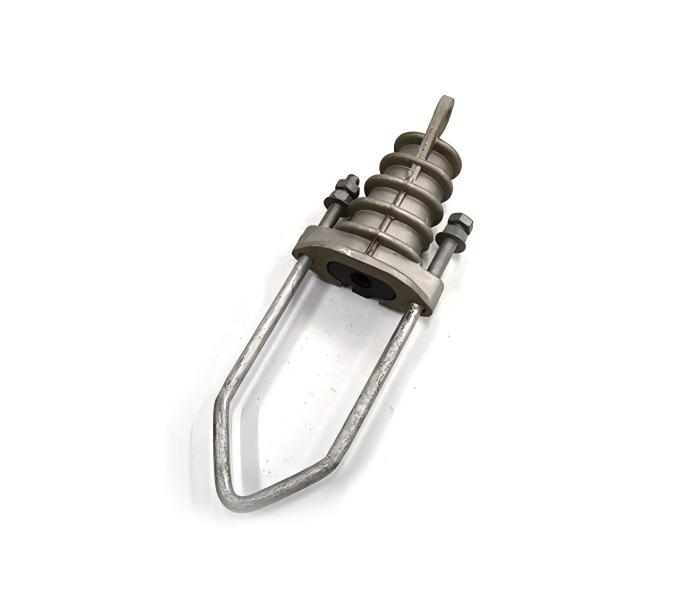
An anchoring wedge clamp is commonly associated with the anchoring or dead-ending of insulated overhead cable. Its wedge mechanism grips the cable as tension is transferred through the clamp to a supporting bracket or structure. Strain clamps form a broader product category used to secure conductors or ground wires at locations where tensile forces must be transferred to line hardware or supporting structures.
Quick answer: An anchoring wedge clamp is often a practical choice for compatible insulated overhead cable systems where a wedge-based, relatively straightforward anchoring arrangement is required. A strain clamp may be more appropriate when the conductor type, mechanical load, line design, or utility specification calls for a dedicated bolt-type, wedge-type, compression-type, or other tension-clamp design. Selection should follow the actual cable and project specification.
The main difference becomes clearer when the clamps are viewed by their intended line application.
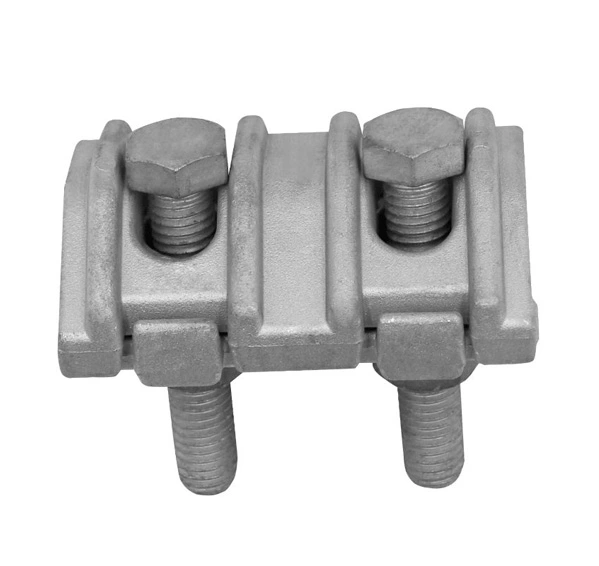
An anchoring wedge clamp uses wedges inside the clamp body to hold a compatible cable. As tension develops, the wedge arrangement maintains the grip while the bail transfers the load to the supporting bracket. This type of design is especially relevant to overhead insulated cable anchoring applications where installation efficiency and cable-compatible gripping are important.
The term strain clamp covers a wider group of fittings. These clamps are installed where conductor tension must be transferred to an insulator assembly, tower arm, pole structure, or other supporting point. Depending on the conductor and network design, the strain clamp may use bolts, wedges, compression, or another approved gripping arrangement.
This means the comparison is better understood as a comparison between a specific anchoring solution and a broader family of tension-support hardware.
| Selection Point | Anchoring Wedge Clamp | Strain Clamp |
|---|---|---|
| Typical Role | Anchoring or dead-ending compatible insulated overhead cable | Transferring conductor or ground-wire tension at strain points |
| Gripping Principle | Wedges engage the cable within the clamp body | Depends on design; bolt, wedge, compression, and other systems may be used |
| Common Selection Basis | Cable type, dimensional range, anchoring arrangement, and mechanical requirement | Conductor type, tensile requirement, line configuration, and project specification |
| Connection to Structure | Often through a bail connected to an anchor bracket or supporting fitting | Depends on the clamp and line-hardware arrangement |
| Best Buying Approach | Match the clamp to the cable and bracket as one anchoring system | Match the clamp to the conductor and complete strain assembly |
The cable is one of the strongest clues when deciding between these clamp types.
An anchoring wedge clamp used with insulated overhead cable needs a gripping range that matches the actual cable. The wedges must engage correctly without creating an unsuitable interface with the cable surface. A clamp chosen only because it looks similar to an existing model can lead to poor fit or unreliable holding performance.
For bare conductors, ground wires, or conductor systems governed by a specific transmission or distribution design, a conventional strain clamp may be the more relevant category. The exact choice then depends on the conductor construction and the approved line hardware arrangement.
Buyers should therefore begin with the conductor specification rather than a clamp catalog. Supplying a cable datasheet, conductor designation, project drawing, or approved BOM gives the manufacturer a much clearer basis for reviewing the clamp.
This approach is especially useful when product terminology varies between utilities or suppliers. A name such as “anchor clamp,” “tension clamp,” or “strain clamp” may describe similar functions in different catalogs, while the actual construction and application can differ.
The installation point also influences clamp selection.
At the end of an insulated overhead cable run, the clamp may connect the cable to an anchor bracket mounted on a pole or supporting structure. In this arrangement, the anchoring wedge clamp, its bail, and the bracket need to work together as a compatible system.
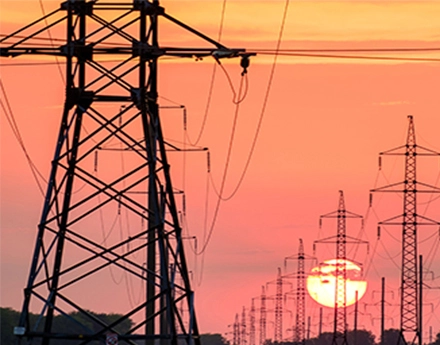
A strain clamp may appear at dead-end structures, angle locations, tension sections, or other points where the line design requires conductor tension to be transferred through the hardware assembly. Depending on the system, the clamp can connect with insulators and additional line fittings before the load reaches the supporting structure.
Looking at the complete assembly helps prevent a common procurement problem: selecting a suitable clamp body while overlooking the component it must connect to.
When several fittings are involved, an assembly drawing can quickly show whether the clamp interface, bracket, insulator hardware, and surrounding components are compatible.
A clamp must hold the cable securely under the mechanical conditions defined by the project. At the same time, the gripping arrangement should suit the conductor or cable construction.
For a wedge design, effective gripping depends on the relationship between the cable and the internal wedge geometry. Correct engagement allows tension to be transferred through the clamp. An unsuitable cable range can prevent the wedge system from operating as intended.
Strain clamps also require careful matching. The approved mechanical performance can depend on the conductor, clamp design, installation method, and applicable utility standard. Two clamps with similar dimensions may therefore have very different intended applications.
This is why a buyer should avoid using the highest advertised load value as the only selection criterion. A clamp needs to be appropriate for the conductor and the way force travels through the complete assembly.
If the project specifies mechanical tests, slip requirements, or other acceptance criteria, these requirements should be provided during the RFQ stage. Doing so gives the supplier enough information to quote the correct product and testing scope.
Installation conditions can make one clamp design more practical than another.
Anchoring wedge clamps are often valued for a relatively straightforward installation concept. The cable is positioned within the gripping system, while the bail provides the connection to the supporting bracket. This can be useful in overhead distribution projects where installation efficiency is important.
Outdoor exposure also deserves attention. The clamp body, wedges, bail, fasteners, and other components may experience rain, humidity, ultraviolet exposure, pollution, and corrosive environments during service. Material and surface-protection requirements should therefore follow the installation conditions and project specification.
Compatibility remains equally important. The best clamp for a project is one that fits correctly into the complete overhead line assembly.
For example, an anchoring clamp buyer should confirm that the bail suits the intended bracket. A strain-clamp buyer may need to verify its connection to an insulator string or associated link fitting. Reviewing these interfaces before production can prevent installation problems at the job site.
YONGGUANG supplies a broader range of powerline hardware and pole line fittings, allowing project buyers to review clamps together with other components used throughout an overhead transmission or distribution assembly.
A useful supplier discussion starts with the actual line requirement. Explain what cable or conductor is being installed and where the clamp will be positioned. If the utility has already approved a drawing or technical specification, that document should guide the selection.
The manufacturer can then review whether an anchoring wedge clamp suits the application or whether another strain-clamp design better fits the project.
Buyers should pay particular attention to the connection between product specification and installation reality. A clamp that fits the cable still needs to work with the supporting hardware. A clamp with adequate mechanical capability still needs the correct gripping arrangement for the conductor.
For international procurement, it is also useful to define testing and documentation expectations before the final quotation. This keeps supplier comparisons consistent and reduces changes after an order has been confirmed.
YONGGUANG manufactures cable fittings and other power line hardware for transmission and distribution applications. For projects involving anchoring clamps, strain clamps, or several related fittings, sharing the cable specification and assembly drawing gives the team a clearer basis for product review.
Unsure which clamp fits your project? Contact YONGGUANG with your cable or conductor information, application drawing, and project requirements. The technical details can then be reviewed before the clamp configuration is confirmed.
The difference between an anchoring wedge clamp and a strain clamp becomes easier to understand once the complete overhead line is considered.
An anchoring wedge clamp provides a practical wedge-based anchoring solution for compatible insulated cable applications. Strain clamps cover a broader range of conductor-tension requirements and may use several different gripping technologies depending on the network design.
The cable or conductor, installation point, mechanical requirement, environment, and surrounding hardware all influence the final decision. Terminology alone gives an incomplete picture, especially because wedge-type designs can also fall within the broader strain-clamp category.
For buyers, the most reliable approach is to compare products against the same approved project requirements and evaluate the complete assembly. This leads to more accurate RFQs, clearer supplier comparisons, and fewer compatibility questions during installation.
Terminology varies between manufacturers and utilities. An anchoring wedge clamp performs a tension or anchoring function and may be considered part of the broader tension-clamp family in some product classifications.
It is commonly used to anchor compatible insulated overhead cable at terminal or anchoring points where a wedge-based gripping system is specified.
No universal substitution should be assumed. The conductor type, mechanical requirement, connection arrangement, and project specification should be reviewed before replacement.
Provide the cable or conductor specification, installation application, relevant drawing, required mechanical performance, quantity, and any project testing requirements.
 EN
EN